
60 Broad Lobby Renovation
7,600 square feet
New York, New York
2025
Aiming to set a new standard within the Financial District, 60 Broad's reimagined lobby space draws wide-ranging inspiration from hotels, residential amenities, and art galleries to create a compelling environment that will serve the office building's community in new and exciting ways.

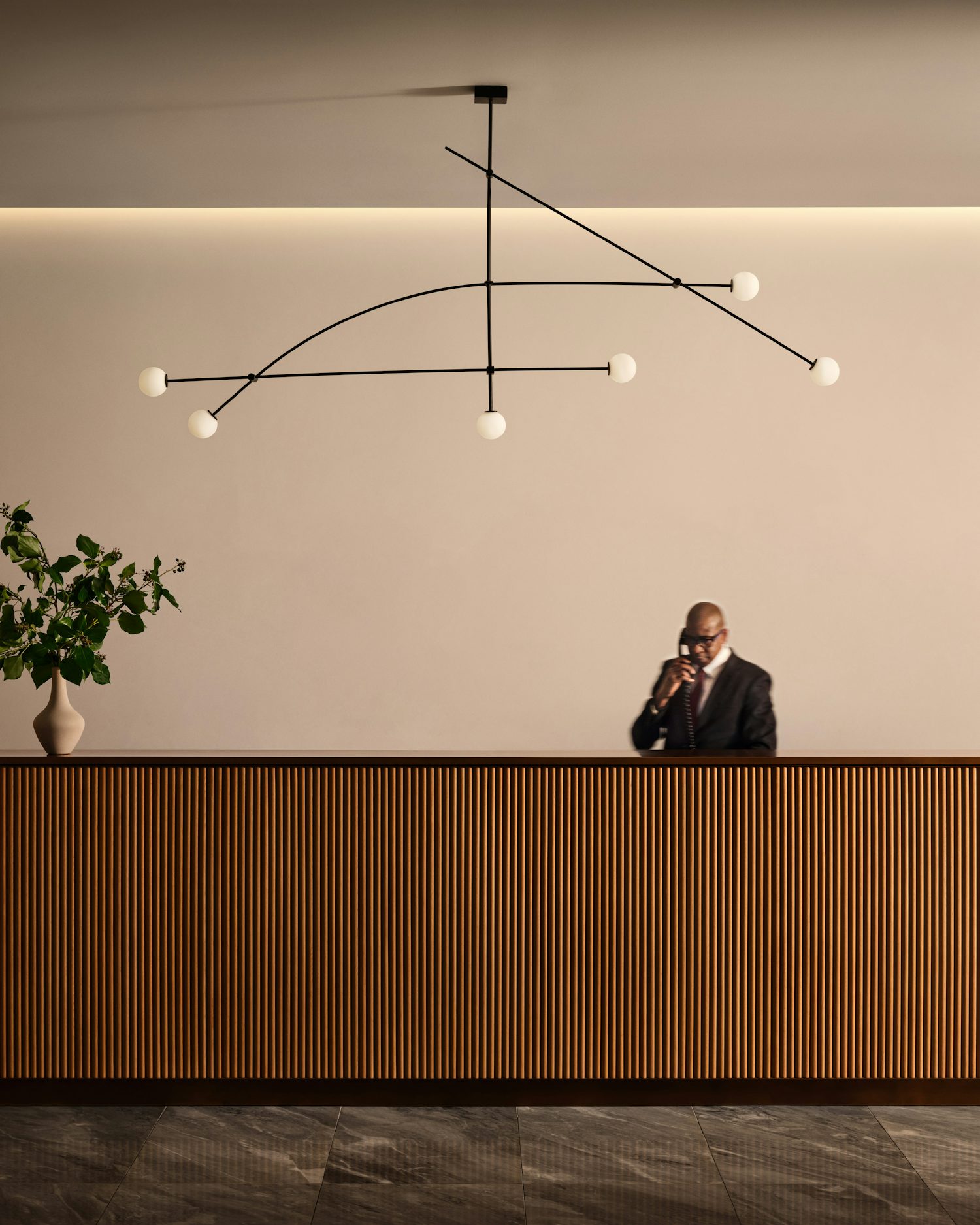
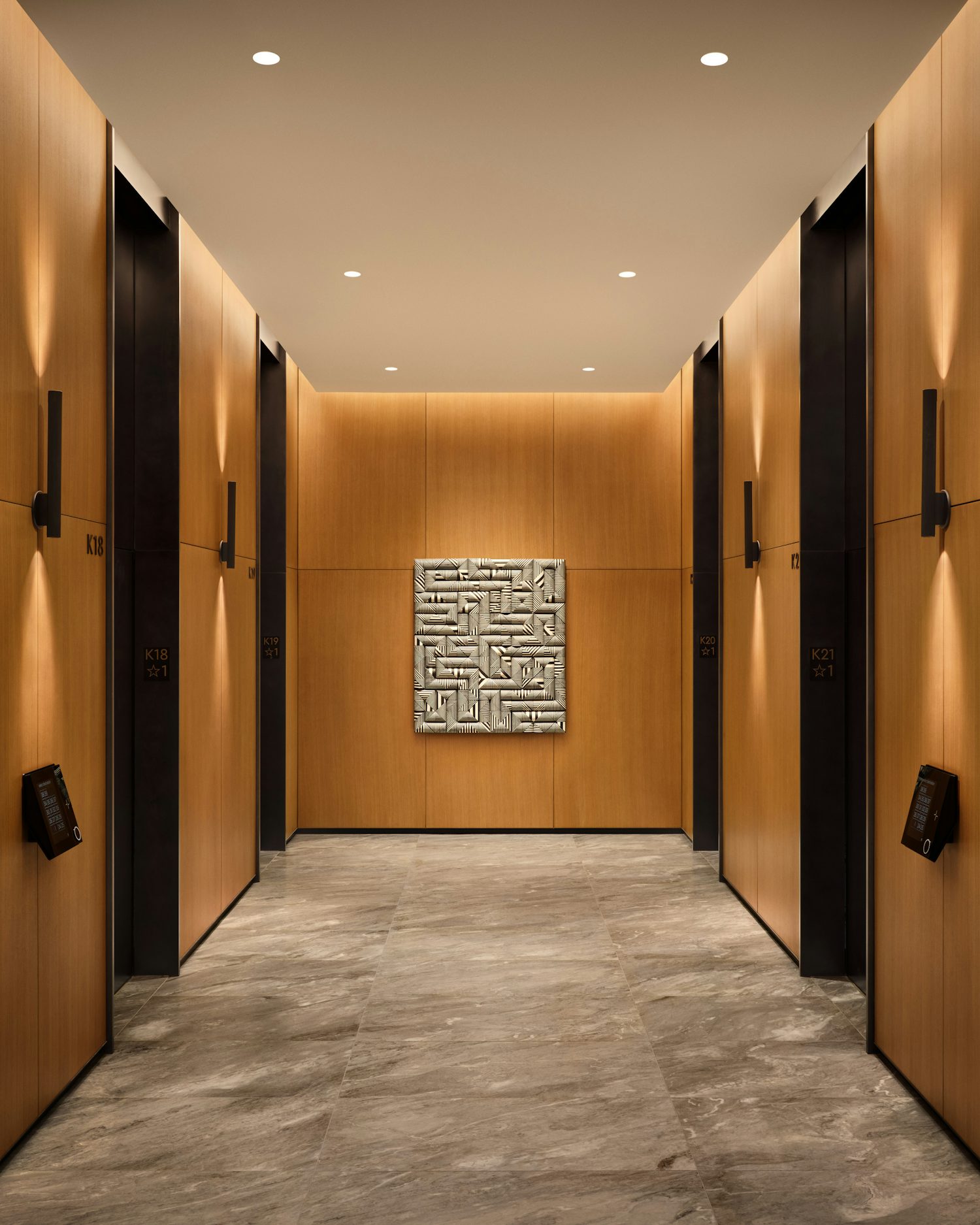
MA was recently retained to design a new lobby experience within 60 Broad—the 39-story, circa 1963 office tower that houses the firm's design practice. The renovation replaced dark wood walls and green marble paneling with gray stone floors and white plaster walls. Other updates include an intimate seating area near the front of the lobby, a new reception desk made of fluted oak and antique brass, light wood paneling along the back wall and the elevator lobby, and recessed ceilings that mimic skylights.
In addition to space planning and interior design services, MA developed the lobby's contemporary art program inspired by the bold gestures of Manhattan's iconic midcentury commercial buildings. The program features several site-specific commissions, including a new mural on the building's front bulkhead by Chicago-based artist Cody Hudson, visible from the street through the plate glass of the lobby entrance.


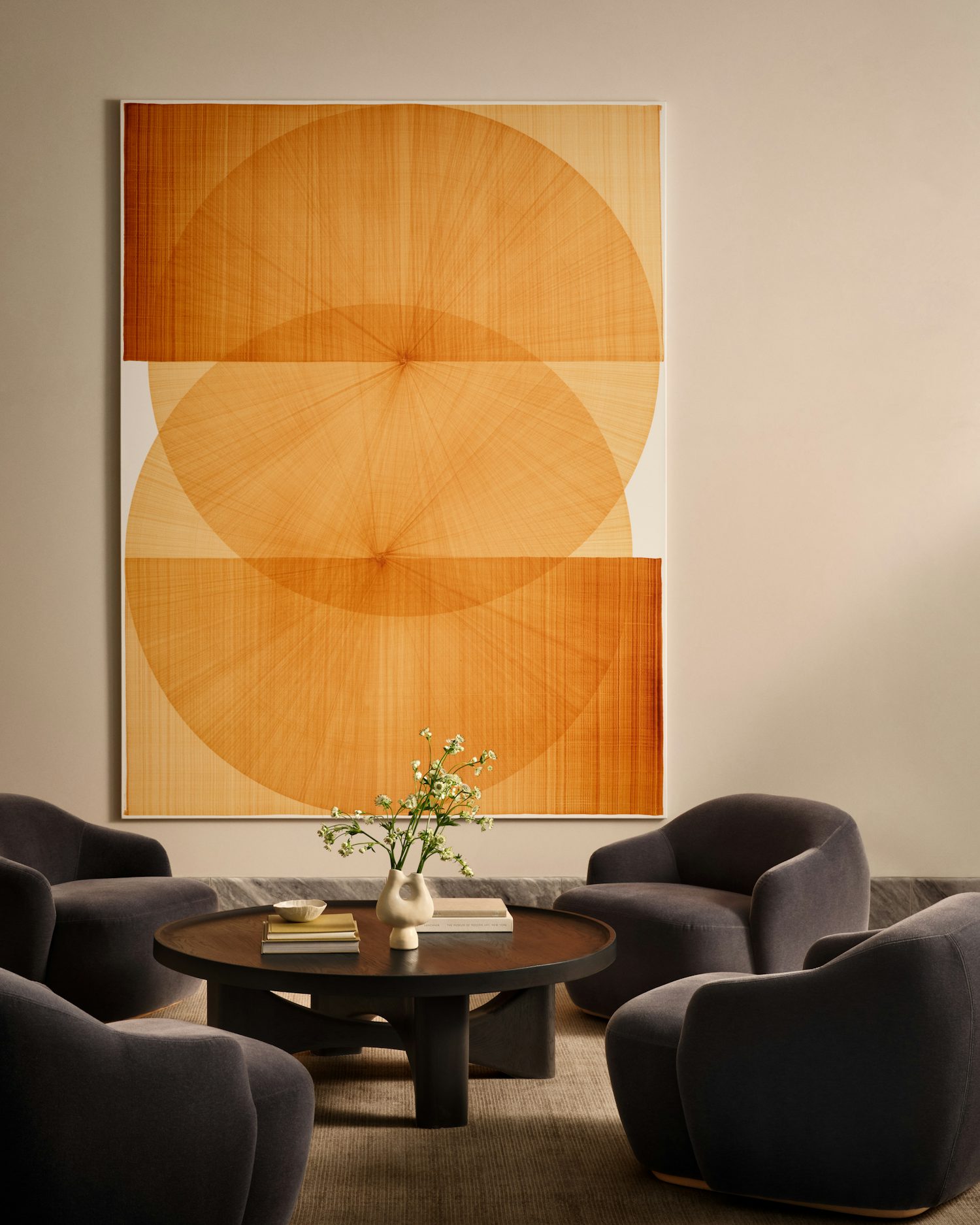


Further along the lobby’s central axis, a freestanding sculpture by Brooklyn-based artist Guy Corriero introduces an architectural presence in the round, while Indianapolis-based ceramicist Jackie Head’s unglazed black-and-white porcelain wall sculpture brings texture and tactility that draws the eye to the oak-clad elevator vestibule. The space also features a full wall mural by noted textile artist Liz Collins, produced as a custom wallcovering by Brooklyn-based Flavor Paper. Corriero also worked with MA to create the hand-sculpted plaster columns found throughout the lobby.



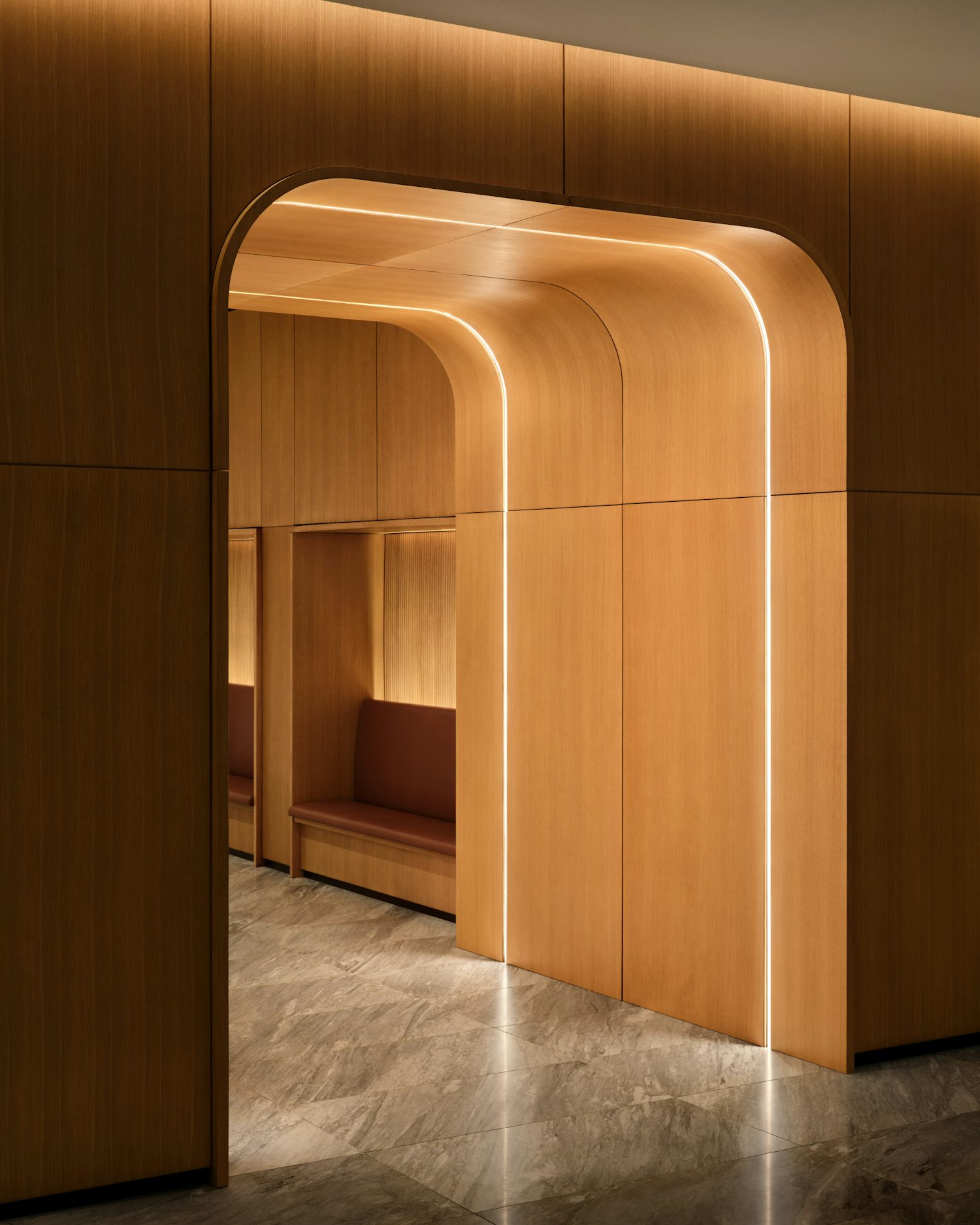
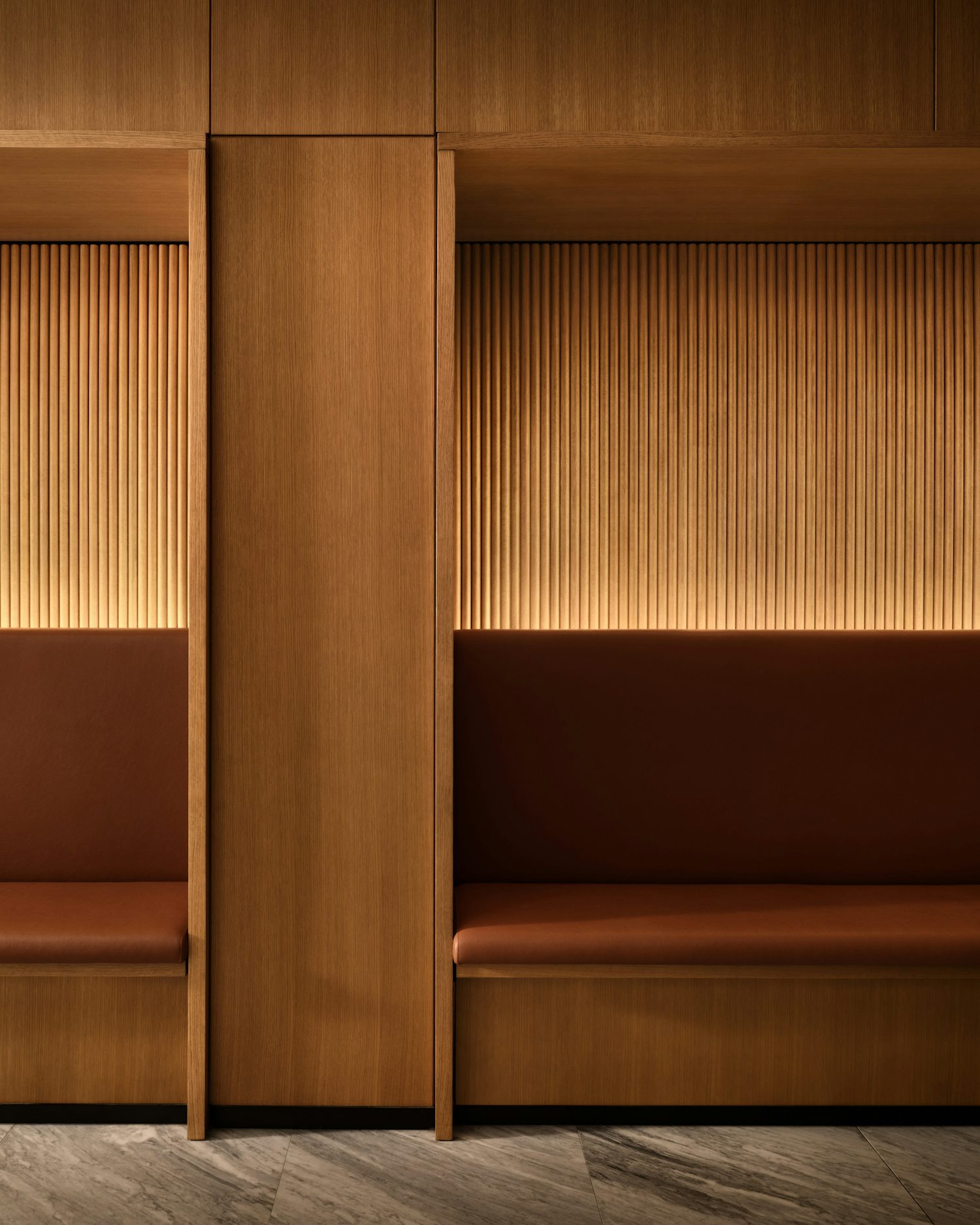
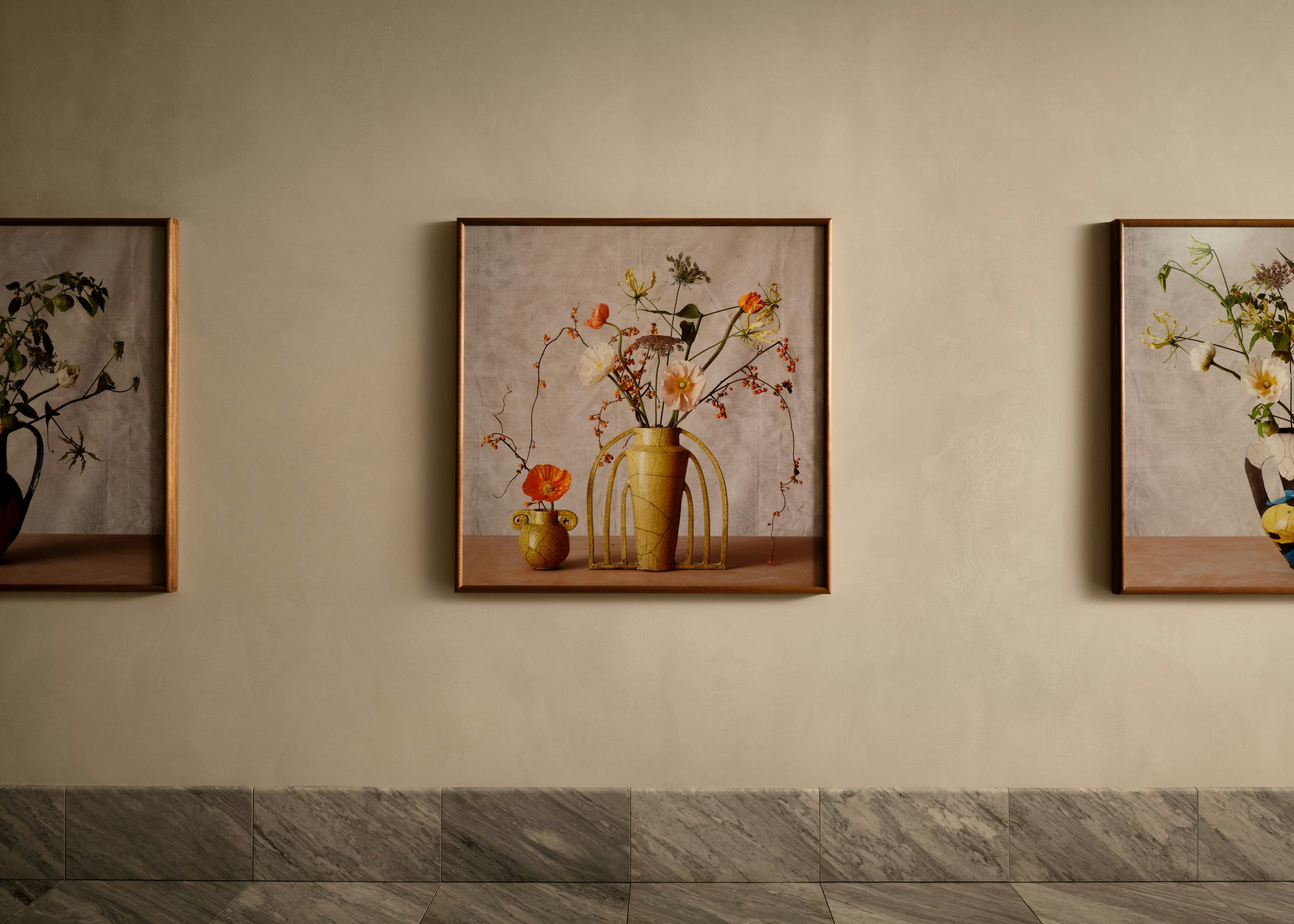
In a quieter, more intimate seating area near the rear lobby, three large-format photographs by Emily Mullin — known primarily for her ceramic work — offer a contemporary take on the still life. Produced with Griffin Editions in Brooklyn, Mullin’s images were dye-sublimated directly onto metal panels, eliminating the need for glass and emphasizing material clarity.


Awards
- Interior Design Best of Year Awards, Winner, Small Commercial Lobby + Amenity Space - 2025
- NYCxDesign Awards, Winner, Commercial Lobby/Amenity Space - 2026
Image Credits
- David Mitchell


